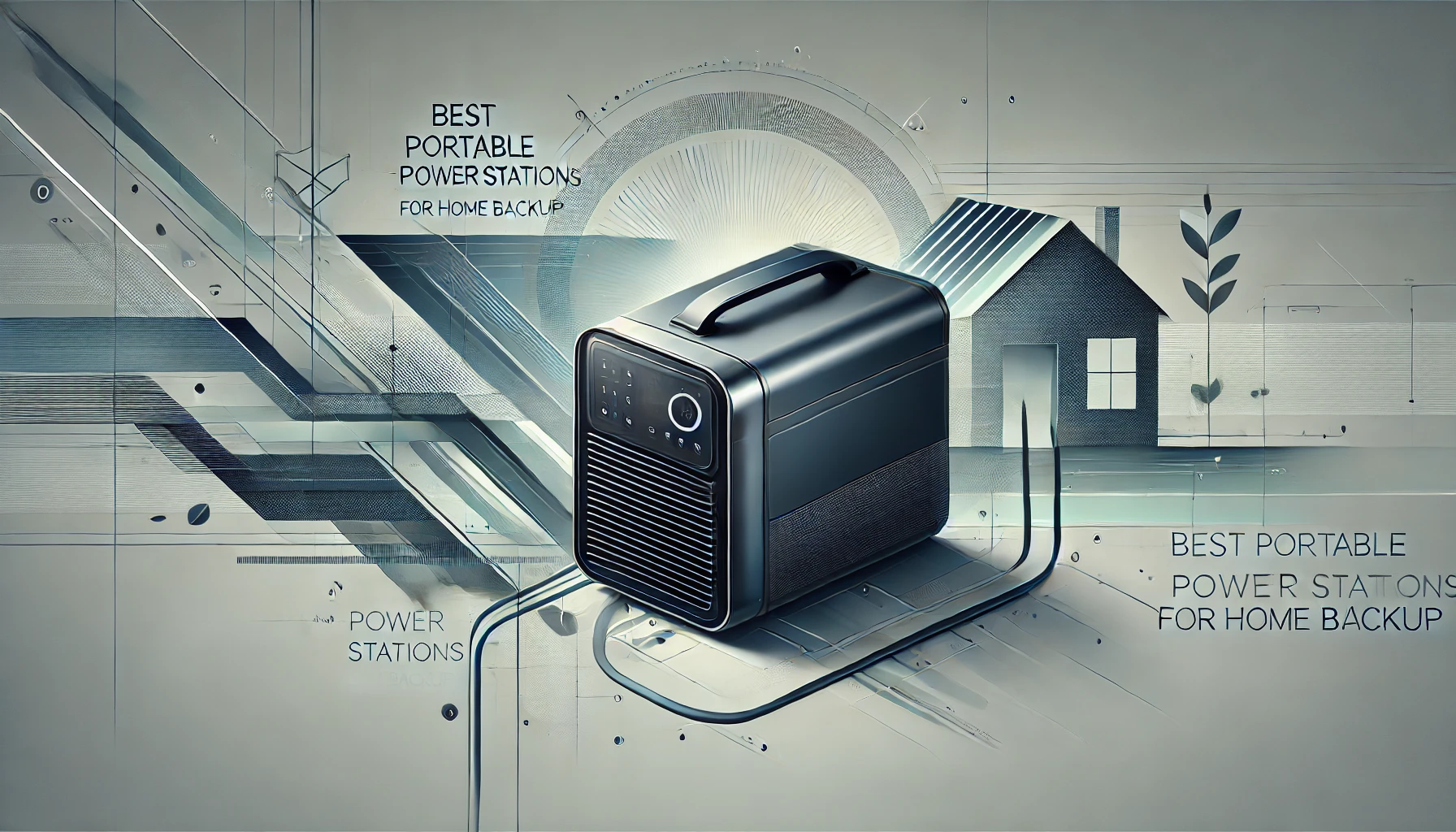
The best portable power stations for home backup are compact, battery-powered systems designed to keep essential devices running during power outages. In simple terms, they are a modern alternative to traditional fuel generators, offering silent operation, zero emissions, and easy indoor use. As power outages become more frequent due to extreme weather, aging grids, and increasing energy demand, portable power stations have become a practical and reliable solution for homeowners who want peace of mind without the complexity of permanent backup systems.
What Is a Portable Power Station?
A portable power station is a rechargeable battery system that stores electricity and delivers it through multiple output ports, such as AC outlets, USB ports, and DC connections. Unlike gasoline or diesel generators, portable power stations do not rely on combustion. They use lithium-based batteries and built-in inverters to convert stored energy into usable power for household devices.
Most portable power stations can be charged through wall outlets, car chargers, or solar panels. This flexibility makes them suitable for both emergency home backup and everyday uses like camping, remote work, or outdoor activities.
For home backup, their key role is to provide temporary electricity to essential appliances and electronics when the grid goes down.
Why Portable Power Stations Are Popular for Home Backup
Homeowners are increasingly choosing portable power stations because they solve many of the problems associated with traditional generators.
They operate silently, making them suitable for use in apartments, residential neighborhoods, and indoor spaces.
They produce no fumes or carbon monoxide, eliminating safety risks associated with fuel-powered generators.
They require minimal maintenance, with no oil changes, spark plugs, or fuel storage concerns.
For short to medium outages, portable power stations offer a simple, clean, and user-friendly backup power solution.
Key Benefits of Portable Power Stations for Home Backup
One of the biggest benefits is convenience. Most units are plug-and-play, meaning they can be used immediately without professional installation.
Another advantage is safety. Because there is no combustion, portable power stations can be safely operated indoors, even overnight.
They are also quiet, which is important during nighttime outages or in shared living environments.
Many models support solar charging, allowing homeowners to recharge during extended outages without relying on the grid.
Finally, portability allows the same device to be used for home backup, travel, and outdoor activities.
Common Home Backup Use Cases
Portable power stations are most commonly used to keep essential devices running during outages.
Homeowners often use them to power Wi-Fi routers, modems, and phones, ensuring communication remains available.
They are also used for medical devices such as CPAP machines, which require uninterrupted power.
Refrigerators can be powered temporarily to prevent food spoilage during short outages.
Home offices benefit from portable power stations by keeping laptops, monitors, and networking equipment online.
In areas with frequent rolling blackouts, they provide a reliable buffer against daily disruptions.
How Much Power Do You Actually Need?
Choosing the best portable power station starts with understanding your power needs.
Battery capacity is measured in watt-hours (Wh). A higher watt-hour rating means longer runtime.
For basic needs like phones, lights, and Wi-Fi, a power station with 300–600 Wh may be sufficient.
For running a refrigerator, medical equipment, or multiple devices, 1,000–2,000 Wh is more appropriate.
For extended outages or multiple appliances, high-capacity or expandable power stations offer the best coverage.
Understanding both capacity and output wattage helps prevent overloading and ensures reliable performance.
Best Portable Power Stations for Home Backup
High-Capacity Power Stations for Whole-Home Essentials
High-capacity portable power stations are designed for homeowners who want to run larger appliances or multiple devices at once.
These units typically offer 2,000 Wh or more and support high inverter outputs.
They can power refrigerators, freezers, sump pumps, and multiple electronics simultaneously.
While more expensive, they provide the closest experience to whole-home backup without permanent installation.
Mid-Range Power Stations for Essential Devices
Mid-range power stations balance affordability and performance.
They are ideal for powering routers, laptops, lights, TVs, and small appliances.
Most households find this category sufficient for common outages lasting several hours.
Compact Power Stations for Emergency Basics
Compact models focus on portability and affordability.
They are best suited for charging phones, running lights, and powering small electronics.
While not suitable for appliances, they offer a reliable emergency solution.
Cost and Price Considerations
Portable power station prices vary widely based on capacity, output, and features.
Entry-level models typically range from a few hundred dollars and cover basic needs.
Mid-range models usually fall in the middle price range and offer the best value for most households.
High-capacity systems can cost several thousand dollars but replace the need for fuel generators and complex installations.
When evaluating cost, it’s important to consider long-term savings from zero fuel, low maintenance, and multi-purpose use.
Pros and Cons of Portable Power Stations
Pros
Portable power stations are quiet, clean, and safe for indoor use.
They require minimal maintenance and are easy to operate.
They are environmentally friendly, especially when paired with solar charging.
They offer flexibility for home backup, travel, and outdoor use.
Cons
They have limited runtime compared to fuel generators.
High-capacity models can be expensive.
They may not support very high-power appliances like central air conditioning.
Recharging during long outages requires planning or solar access.
Portable Power Stations vs Traditional Generators
| Feature | Portable Power Station | Fuel Generator |
|---|---|---|
| Noise | Silent or very quiet | Loud |
| Emissions | None | Produces exhaust fumes |
| Indoor Use | Safe | Unsafe |
| Maintenance | Minimal | High |
| Runtime | Limited by battery | Extended with fuel |
Buying Tips for Home Backup Power Stations
Start by identifying which devices you want to power during an outage.
Check both battery capacity and inverter wattage to ensure compatibility.
Look for models with multiple output ports to support different devices.
Consider solar compatibility for extended outages.
Pay attention to warranty, battery lifespan, and brand reputation.
UPS or pass-through charging features are valuable for home offices and networking equipment.
Real-World Examples
A homeowner in a storm-prone area uses a mid-range power station to keep their refrigerator and Wi-Fi running during outages.
A remote worker relies on a portable power station with UPS functionality to avoid interruptions during video calls.
A family uses a high-capacity model paired with solar panels to maintain essential power during multi-day blackouts.
These scenarios demonstrate how portable power stations adapt to different household needs.
Frequently Asked Questions
Can a portable power station run a refrigerator?
Yes, many mid-range and high-capacity models can run a refrigerator for several hours.
Are portable power stations safe to use indoors?
Yes, they produce no emissions and are safe for indoor use.
How long do portable power station batteries last?
Most lithium-based batteries last several years with proper use.
Can I recharge a power station during an outage?
Yes, solar panels and car chargers provide alternative charging options.
Conclusion: Choosing the Best Portable Power Station for Home Backup
The best portable power stations for home backup provide a reliable, clean, and flexible way to stay powered during outages.
They are ideal for homeowners who want safety, convenience, and versatility without the noise and complexity of traditional generators.
By understanding your power needs, budget, and expected use cases, you can choose a power station that delivers real value and peace of mind.
As power reliability becomes increasingly uncertain, investing in a portable power station is not just a convenience—it is a smart step toward household resilience.